
Blog, Navigation & Electronics, Other Camping Gear
Never Run Out of Light: Headlamps You Can Trust At Night

Nov
Light up the night — because tripping over a root is so last adventure.
You will NEVER fumble in the dark again.Picture this: you drop your headlamp on a rainy ridge and suddenly every shadow looks like a cliff. Your heart races. Your pace slows. That panic is gone the minute you click on the right light.
You want BRIGHT, TRUSTWORTHY light that won’t bail on you mid-hike or mid-fix. No weird flicker. No dead batteries five miles from camp. These headlamps solve the real pain: seeing clearly, staying safe, and keeping you moving when the sun won’t. Plug in, clip on, and own the night.
Top Picks


Fenix HM71R 2700 Lumen Right-Angle Headlamp
You get an insane punch of light and a real tool you can clip, stand, or wear. It feels built for heavy use, but you should respect the hottest setting — it performs best when you manage heat and battery draw.
Big throw, built like a tool
The HM71R is for you when darkness is not a nuisance but the job. It throws a focused beam hundreds of yards while also offering a wide flood for close work — a rare combo that makes it fantastic for search, caving or technical night repairs. The right-angle design means you can clip it to clothing, mount it magnetically, or use the headband for hands-free light.
How it helps you in real use
This is a headlamp that feels like a tool you’d take to a long night shift. The huge output gets through fog and long sightlines; the flood keeps your feet and work area visible. The included LumenTac organizer and USB-C charging make topping up easy between shifts.
Limits and real-world advice
The tradeoff for that brightness is heat and battery drain on turbo modes — a few users reported lens or plastic damage when the lamp was blocked on max output. You won’t want to run the top mode for hours. To get the most from it, use medium settings for general work and reserve turbo for short bursts.
Tips from the trail and workshop
Mount it on a helmet, clip it to a belt, or detach it and stick it to metal for directional light when you need both hands. Carry a spare battery or plan for charging if you’ll need long high-output sessions. Treat the extreme-high mode like a tool: quick, powerful, and used with respect.
Petzl Actik Core Rechargeable Hybrid Headlamp
You get a headlamp that blends great run-time with the safety of disposable backups. It feels smartly designed: nice beam patterns, tilt, and a reliable hybrid battery system that keeps you moving when chargers aren’t handy.
Smart, comfortable, and made to last
The Actik Core is the sort of headlamp you bring because it’s dependable in any situation. The hybrid design means you can run on the included rechargeable CORE pack or swap in three AAA cells if you need a quick backup. The two beam patterns — wide and mixed — make it useful whether you’re cooking in camp or moving fast on a trail.
Why outdoors folks love it
You’ll like the balanced brightness that keeps your hands free and your night vision intact when needed. The lamp tilts, so you can look up and still light your immediate area, or drop it down for close tasks like cooking. Petzl’s attention to burn-time behavior means the light stays useful longer into a trip.
Small drawbacks to be aware of
It isn’t the brightest on paper, but the beam quality often matters more than raw lumen numbers. A few people find the headband needs minor adjusting on long days to stop it from loosening — an easy fix, but worth checking before a long trip.
Real-world tips
Carry one spare CORE pack if you can, or bring a small set of AAA en route. Use the wide beam for camp and mixed beam when you need to see further ahead while running or climbing. The lock feature is handy for packing — flip it on before stuffing it in your pack.
Fenix HM55R 1200 Lumen Dual-Beam Headlamp
You get a bright, lightweight headlamp that won’t tire your neck on long hikes. It pairs strong throw and wide flood with a smart proximity sensor so you don’t blind yourself up close.
Light, long, and smart
If you want a headlamp that feels small on your head but bright enough to trust at night, this is it. The HM55R gives you a focused beam for distance and a flood for close work, plus a red light to keep your night vision intact. The smart proximity sensor lowers brightness when you bring the lamp close to objects, which is handy in tents or on campsites.
Why it’s a practical pick
You’ll notice the low weight on long treks and the long low-mode runtime if you use it for camp chores or as an emergency light. The waterproof rating and impact resistance mean you can use it in rain without worry, and the quick charge gets you back on trail fast.
Small annoyances and how to handle them
The controls are compact; expect to tap and hold a few times before it feels natural. Also, the lack of a true lock means you might want to remove the battery in long gear storage to avoid accidental drain. For most users, these are minor tradeoffs for what you get.
Practical tips for using it nightly
Set the flood for walking and the spotlight for scanning tracks. Use red mode while breaking camp to keep friends’ night vision intact. Bring a spare battery on multi-day trips if you plan heavy use.
Ledlenser MH11 1000-Lumen Bluetooth Headlamp
You get modern features like Bluetooth customization and a long, clear beam that’s great for precise night work. It’s heavier and pricier, so it’s best when you value connectivity and fine-tuning over minimalist simplicity.
Tech-forward, bright and precise
The MH11 brings smartphone customization to your headlamp. Via the app you can tweak mode groups, brightness ramps, and memory settings — great if you want the lamp to behave exactly how you like it. The boost mode gives a powerful punch when you need to light up a long trail or a distant object.
Why you might choose it
If you love gear that adapts to your style, the MH11 rewards tinkering. Hunters, bikepackers and tech-minded campers will like setting custom profiles for night riding, camp chores, or signaling. The magnetic charger is fast and convenient when you need a top-off.
Tradeoffs to consider
It’s not the light for minimalists — it’s heavier and has a learning curve because of the many modes and app options. The price is higher, but you’re paying for precision engineering and app control.
Practical use suggestions
Set one simple profile for night hikes and another for camp chores so you don’t fiddle with settings in the dark. If weight matters for long runs, consider pairing this with a lighter backup. Otherwise, enjoy the way the lamp feels like it was tuned to how you use it.
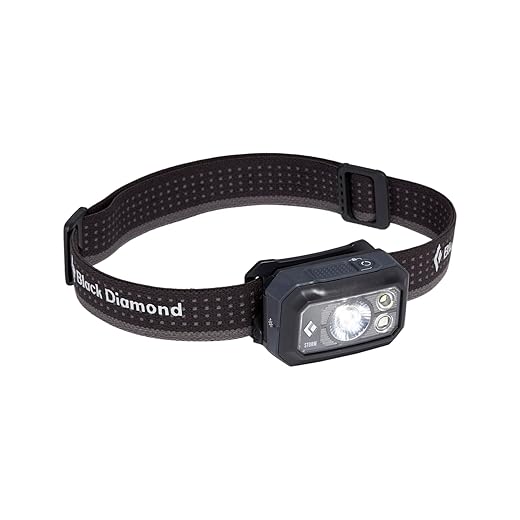
Black Diamond Storm 400 Versatile Weatherproof Headlamp
You get a bright, multi-color lamp that handles rain and mud without fuss. It remembers settings and offers lots of color and dimming options, which is great for tactical or group trips.
A Swiss Army knife of headlamps
This one is packed with modes: full white, proximity, distance, red/green/blue night-vision, strobe and lock. It’s a great choice if you do different kinds of night work — from hunting to campsite duties — because the colors preserve night vision and the flood-to-spot control is quick to access.
What you’ll like about it
It remembers the last setting you used and lets you fine-tune brightness on the fly. If you need a single lamp that adapts to many jobs, this one does the trick. The battery life is excellent on lower modes, so it’s handy for long chores.
Where it can fall short
The lamp runs on AAA cells, so you trade a little weight for convenience of replacing batteries in the field. A few users also reported small plastic components that can wear with heavy indoor use over years, so treat it like gear you rely on and check it now and then.
Tips for day-to-day use
Use green mode for map work to keep contrast and preserve night vision. Keep a pack of quality alkaline AAAs (or rechargeables if you use them frequently) and try not to leave it on max for long stretches in cold weather.
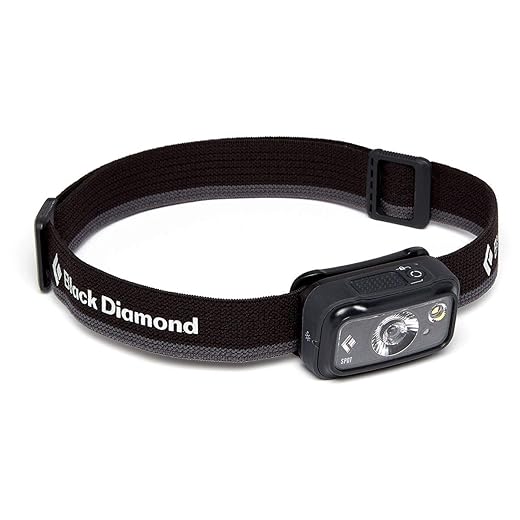
Black Diamond Spot 350 Compact Trail Headlamp
You get a simple, proven light that won’t overcomplicate a night on the trail. It’s compact, comfortable, and gives good battery life with flexible beam control.
Small, smart, and very dependable
This is the headlamp you pick when you want something that just works. It’s light on your head and offers a punchy 350 lumens in a small package. The PowerTap button lets you jump between full and dim without hunting through menus — great when you’re on a run and need instant light changes.
Why it shines for everyday users
You don’t need to babysit this light. It’s rugged, comfortable, and the simple controls mean you spend less time fumbling and more time moving. Battery swaps are fast if you’re out in the backcountry with no charger.
When it’s not ideal
If you need very long throw or rechargeable convenience out of the box, this unit is not the most modern choice. But for trail runners, campers, and anyone who wants a fuss-free lamp, the tradeoff is worth it.
Practical use notes
Keep a spare set of AAA batteries in your pack for multi-day trips. Use dimmer settings for map reading and save full power for when you actually need to see far ahead.
Final Thoughts
Pick the Fenix HM71R 2700 Lumen Right-Angle Headlamp if you need POWER and TOUGHNESS. It throws a massive beam, clips or stands for hands-free work, and feels built like a tool. Ideal for search-and-rescue, night repairs, caving, or any job where raw output and durability matter. Tip: respect the hottest setting — use bursts or manage battery heat to get the best performance.
Choose the Petzl Actik Core Rechargeable Hybrid Headlamp if you want RELIABILITY and versatility on the trail. It pairs long runtime with the safety of disposable backups, has good beam patterns and tilt, and keeps you going on multi-day trips or late-night runs. Perfect for hikers, trail runners, and anyone who wants a smart, dependable light that won’t leave you stranded.

Question: For helmet work, is the HM71R right-angle better than a standard front-facing headlamp? I’m thinking about weld/auto tasks where I need hands free and directional light.
For welding you might still want a hood, but for auto/more precise repairs the right-angle is a game-changer.
I prefer right-angle for mechanical work. It illuminates the work surface without the beam being in your eyeballs when you lean over.
Right-angle lamps like the HM71R are great for helmet mounting — they direct light where you look without the head tilting. They also clip nicely for workbench tasks. Just keep an eye on heat if using high modes near your face.
I love the simplicity of the Black Diamond Spot 350. Quick question: does anyone use it for night runs in winter with gloves? Can you change modes easily with gloves on?
I run with thin running gloves and it’s fine. With thick snow gloves, I fumble a bit but usually set mode before heading out.
Tip: use a long-press to switch into a simple mode and avoid mid-run button fights.
The Spot 350’s buttons are reasonably glove-friendly, but bigger mitts can make it fiddly. You can also lock a preferred mode on some firmware versions. If gloves are thick, practice the button sequence at home first.
Great roundup — thanks! I’ve been hunting for a reliable work light and the Fenix HM71R caught my eye. A couple questions:
1) Anyone used the HM71R clipped to a construction helmet all day? Does the heat on high mode bother you?
2) How long does that ‘insane punch of light’ last before you need a recharge on heavy use?
I like that it’s right-angle and industrial grade, but worried about heat and battery life for long shifts.
Good questions, Claire. The HM71R can get noticeably warm on the highest setting; many users run it at a slightly lower level for all-day comfort and better battery life. For long shifts, using medium-high settings or swapping in a backup battery is a smart move.
Also remember that body/helmet contact can change heat dispersion. I used a thin silicone pad between the lamp and helmet strap — reduced the hot-spot annoyance.
I clipped one to my helmet for a 10-hour renovation day. It was warm but manageable if you avoid the turbo mode. Battery lasted most of the day at medium. Bring a power bank for peace of mind.
Long post: I tried both a cheap generic headlamp and the PETZL ACTIK CORE on a multi-day trek last month and the difference was night & day.
– Cheap lamp dimmed after a few hours and didn’t have red light mode for map reading.
– The ACTIK CORE: comfortable, good beam spread, red light saved our night vision.
– Hybrid battery saved us when I forgot the charger (facepalm)
Would recommend PETZL for anyone who wants reliability without breaking the bank. Also, keep spare AAAs if you go hybrid — they’re lifesavers.
Excellent detailed comparison, Zoe — thanks. Red light is underrated for group trips and map work. PETZL’s hybrid capability is one of the main selling points for backcountry users.
Facepalm acknowledged 😅 — spare AAs saved me too on a foggy summit.
Agree — cheap lamps do the bare minimum. PETZL is worth the extra money for safety and runtime.
Also recommend bringing a small solar charger if you’re really far out — charges the core battery in a pinch.
Yep, red light keeps animals from spooking too. And that hybrid option is a must for remote areas.
Minor rant: product pages list lumens like it’s the only thing that matters. In practice beam quality, spill, and thermal management matter way more. The Fenix HM71R’s ‘insane punch’ is awesome, but it’s useless if it overheats and steps down in 10 minutes. End of rant.
Totally agree — raw lumen numbers are one part of the story. Heat management and usable runtime under realistic conditions are far more useful metrics.
There’s a place for peak lumens (like rescue), but for camping and work it’s the sustained curves that matter most.
Amen. I wish reviews would include sustained output graphs instead of peak lumen bragging.
Has anyone compared the PETZL ACTIK CORE to the Black Diamond Spot 350 for trail running? I like the idea of hybrid power for long trips but worry about weight.
I run with the Spot 350 — it’s lighter and simpler, which I prefer. The PETZL is slightly heavier but offers that hybrid battery bonus. If you’re ultra-light focused, go BD; if you like backup flexibility, PETZL.
Both are solid for running. The Spot 350 is aimed at reliability and comfort, while the ACTIK CORE gives you hybrid power plus a bit more output. Think about whether you value weight over the safety of an AA backup.
Just a quick FYI for folks: if you’re traveling internationally, check the battery rules for planes. Some of these rechargeable packs may need to go in carry-on. Pet peeve: I once had a lamp seized at check-in because of strange battery rules 😒
Good reminder, Sara. Most airlines want lithium batteries in carry-on. Always check current airline policies before flying with headlamp batteries.
Yup — and if possible, remove batteries and put them in your carry-on. Saves headaches at security.
Anyone use the HM71R with the LumenTac Organizer? Is it actually helpful to keep batteries and spare bits tidy, or just another piece of gear to carry?
I use it — saves me time finding spares in a busy toolbox. Not necessary for weekend hikers though.
It also keeps small bits from bouncing around in my pack, which I appreciate.
The LumenTac Organizer is handy if you rotate batteries or carry multiple carries — it keeps everything in one place and protects contacts. If you’re minimalist, you might skip it, but for work kits it’s useful.
Two cents: if you’re choosing between throwy lights (Ledlenser/HM71R) and flooders (HM55R/Spot 350), think about what you’re doing most. Hiking: mix of both. Trail running: flood is friendlier. Searchlight-style lamps are great for search/rescue or precise night navigation.
Agreed. I keep a compact flood for running and a thrower for longer backcountry pushes.
Good summary, Javier. Beam pattern should match activity: wide and even for close obstacles, tight and long for scouting ahead. Several of these lamps try to bridge both, but pick the one that matches your main use.
Anyone noticed strap wear issues on the Ledlenser MH11? The strap looked a bit thin in photos. Concerned about long-term durability.
Mine’s held up fine for a year with regular use, but I treat headlamps roughly. If you’re rough on gear, have a backup strap ready.
The MH11’s strap is generally decent but not the beefiest. If you plan heavy use, look for replacement straps or a headband cover to distribute sweat and reduce wear.
I ordered the Ledlenser MH11 because I wanted Bluetooth and fine-tuning via app. First impressions:
– Beam is seriously tight and long.
– App is a little clunky but useful for custom modes.
– Heavier than my old lamp, but worth it when I need precision at night.
Anyone found the boost mode too aggressive? It felt like pointing a car headlight at a squirrel 😂
App clunky is an understatement but once configured its handy. Tip: set a simple shortcut for boost so you dont fumble at night.
Haha I know that squirrel feeling. I use boost for spotting trails far ahead but keep a low setting for campsite setup. Also, a quick double-tap usually gets me where I need.
The MH11’s boost is powerful — great for long throws but it sips battery fast and can be blinding up close. Use boost sparingly and switch to lower modes for nearby tasks.
Also check the strap comfort — Ledlenser’s strap is decent but if you’re sensitive, add a thin sweatband.
Agree on the weight — I noticed neck fatigue on long walks. If you’re wearing a headlamp for many hours, try balancing with a rear battery or lighter model.
Heh, bought a Spot 350 after reading this roundup. Very comfy, simple to use, and survived a muddy weekend. Couple of notes:
– The seal on the battery compartment kept mud out.
– Red mode is great for group tent etiquette.
– If you want ultra-simple, this is it.
5/5 for ‘I want something that works and I don’t want to tinker.’
Red mode etiquette — yes! People forget how bright white can be in tents.
Thanks for sharing your real-world test, Nina. The Spot 350 is designed to be that no-nonsense reliable light, so glad it held up in mud.
Also appreciate the durability notes. I’m clumsy and need something forgiving.
Black Diamond Storm 400 looks nice for wet weather. Anyone used it in serious rain or near saltwater? Curious about corrosion resistance and how the colors hold up.
Storm 400 is marketed as waterproof; in practice, it’s good for heavy rain but always rinse salt off after exposure and dry the strap to prolong life.
I used the Storm 400 paddleboarding in light rain and it did fine. No corrosion yet but I rinse gear after salt exposure. The seals seem solid.
Used the Fenix HM55R for a 3-day backpacking trip. Short summary:
– Fantastic runtime in low modes
– Proximity sensor is soooo helpful when you’re reading maps at night without blinding yourself
– Lightweight enough to not feel like a burden
One annoying bit: I wish there was an easier way to lock modes to avoid accidental activation in my pack.
I found the same. Proximity sensor is clutch. About lock: double-press patterns differ across Fenix models, so check the manual — saved me once when it turned on in my bag.
FWIW I just shove a small carabiner clip and hang it strap-outside — reduces accidental button presses by keeping it visible.
Thanks for the report, Omar. The HM55R does have a lockout feature (hold the power button for a few seconds) — not the most obvious but it prevents accidental turns. Good point that the UI could be more intuitive.
Proximity sensor was the selling point for me too. Makes camp chores much less annoying.