
Blog, Navigation & Electronics
Pick Your Night Gear: Petzl Actik Core vs BioLite Dash

Nov
Ready to stop fumbling in the dark and pick the headlamp that keeps you safe, saves your wallet, and actually lasts all night?
You want a headlamp that won’t fail on a dark trail or midnight camp shift. This intro pits the PETZL ACTIK CORE against the BioLite Dash 450 so you can pick the light that keeps your peace of mind tonight.
Versatile Explorer

You get a dependable, no-nonsense headlamp that lets you push into the night without worrying about backups. It’s built for hikers and climbers who want bright, adjustable light and the flexibility of rechargeable or disposable power. Expect a rugged, comfy fit with a little room to perfection-tune the strap.
Running Ready

You’ll love how light and balanced this feels during long runs or trail miles — it barely bounces and is super comfy. The battery life is impressive so you don’t worry about mid-trip charging, but the rear pack and occasional heat on high are trade-offs to note. Overall it’s a great pick if comfort and runtime are your top priorities.
Petzl Actik Core
BioLite Dash
Petzl Actik Core
BioLite Dash
Petzl Actik Core
BioLite Dash
Brightness & Battery: Will It Keep You Seeing?
How the beams actually feel on trail
The PETZL ACTIK CORE punches harder up front — advertised as a 600-lumen peak with a mixed beam that gives you both a wide flood for campsite tasks and a tighter spot for route-finding. You’ll notice more “wow” light when you need to pick out trail features or white-knuckle a steep scramble.
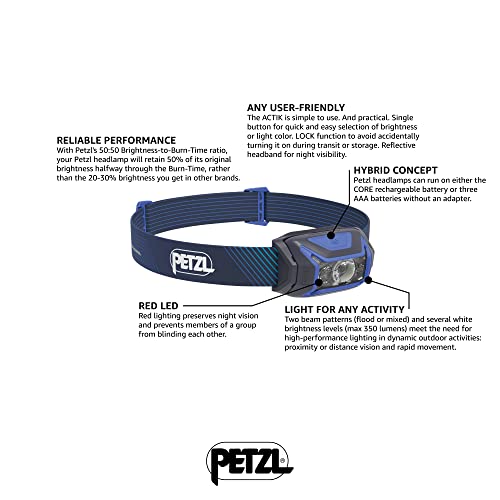
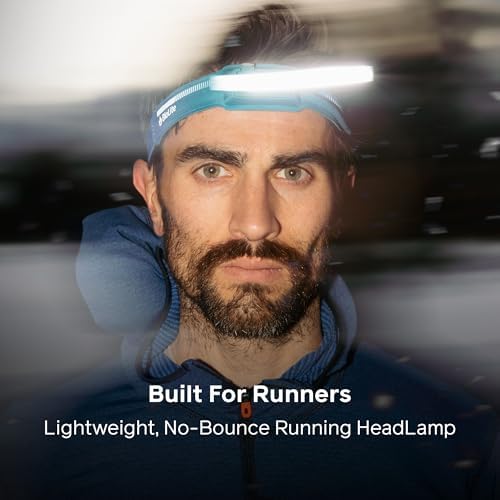
The BioLite Dash 450 is slimmer and cleaner: 450 lumens focused through optimized optics for a long, usable beam (BioLite lists about a 90 m range). It feels more like a laser-guided trail light — great for running or long-distance hiking when you want a steady tunnel of light.

Real-world battery sense and charging
Avoiding the dark panic
Pick Actik if you need raw punch + backup battery options. Pick BioLite if you want a sleek, long-running focused trail light.
Comfort, Fit & Durability: Will It Stay Put?
How the PETZL ACTIK CORE feels
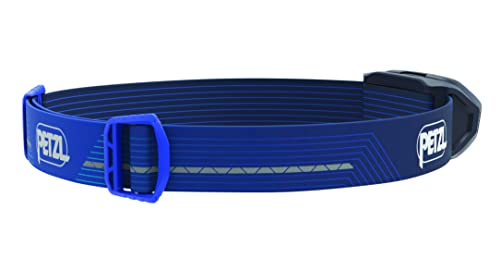
The Actik CORE sits light on your head (around 3 oz) and feels sturdy. The band is soft and breathable, but some folks find it slowly loosens over very long hikes — you might need a quick tighten between steep sections. The lamp’s tilt and balanced head unit keep the beam where you point it, though the CORE battery pack can shift the center of gravity a touch if you’re wearing a snug beanie. Petzl’s plastic housing and lifetime warranty mean it survives drops and scrapes; IPX4 splash resistance handles rain without drama. The lock function stops accidental turn-ons in your pack — a small thing that saves big headaches.
How the BioLite Dash 450 feels
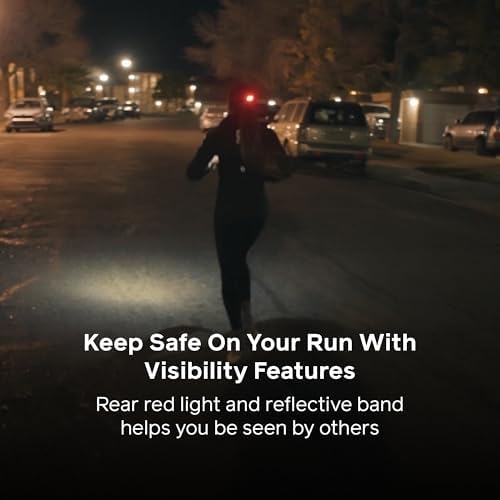
BioLite nailed the “barely there” fit. The Dash is ultra-slim (about 78 g and just 10 mm front profile) and designed to not bounce when you run. Moisture-wicking fabric prevents chafe, and the no-slip strap keeps the light steady on trail runs. The rear red light and reflective band help with visibility and balance, though the rear module can be noticeable when you lie back or wear tight hats. Built from tough ABS/polycarbonate with IPX4 water resistance and a 3-year warranty, it’s made to take knocks — but the unit can warm up on long high-output runs.

Everyday Features: What Makes Night Work Easier?
Red & low-light modes — keep your night vision
You don’t want to blind your tent mate or lose your night vision. The Petzl gives you a true red mode and multiple beam types (wide or mixed), so you can read a map or light a stove without wrecking your eyes. The BioLite adds a rear red light and reflective band for 360° visibility — great when you want to be seen on trail runs.
Controls & glove use — no fumbling
When it’s cold and you’re wearing gloves, tiny buttons are the enemy. Both lights stick to simple button controls you can cycle with a gloved thumb. Petzl’s lock function also stops accidental turn‑ons in your pack — a tiny feature that saves big panic when you reach for a light and find a dead battery.
Charging & power options — don’t get stranded
Here’s where they flip priorities: Petzl is hybrid — use the included CORE rechargeable battery or pop in three AAA cells if you run out of juice. That flexibility feels like a safety net. BioLite is USB‑C rechargeable with a quick ~2‑hour charge and wildly long low‑mode runtime, so you can top up fast and forget about alkaline spares.
Quick features that save headaches
These everyday details cut stress — less fumbling, fewer blinding moments, and faster light when you need it.
Feature Comparison Chart
Price, Value & Who Should Buy Which
Which gives more for the money
You get real value from both, but in different ways. Petzl is about practical peace of mind: cheaper (~$63), hybrid power (CORE battery + AAA backup), tilt and beam options — that feels like insurance when you’re far from help. BioLite (~$70) costs a bit more, but you pay for a weightless fit, sleek USB‑C charging, and a long low‑mode runtime that keeps you out longer without fiddling with spares.
Who each lamp fits best
You should pick based on how you feel in the dark:
Quick pros/cons
Fast buying tips
If you worry about running out of power, buy Petzl. If you hate bulk and want the most comfortable all‑day wear, buy BioLite.
Final Verdict: Pick Your Night Gear
Overall winner: PETZL ACTIK CORE — grab it if you crave raw power, long reach, and battery flexibility to conquer dark trails and stay confident.
Pick the BioLite Dash 450 for lighter, simpler gear for everyday hikes and quick runs — comfy, easy, perfect when you want no fuss. Choose light that makes your nights easier.

I used the BioLite Dash for a weekend bikepacking trip. Battery lasted the whole weekend at medium output and the headlamp didn’t bounce on the helmet strap. Price/performance is solid.
One thing: the grey color shows dirt easily lol
Helmet use tip: clip the lamp to your helmet strap rather than relying on the headband when rough singletrack.
Grey showing dirt = relatable. I just scrub mine in a sink after trips.
Nice field report, Hannah. Helmet compatibility matters — glad the Dash worked well for that use.
Small rant: the Actik Core’s headlamp light pattern feels a bit ‘hot-spotty’ to me. The dash throws a softer, wider beam which I prefer when navigating roots and rocks.
Maybe I’m just picky about beam quality.
Beam pattern preference is subjective. Actik Core mixes proximity and distance beams, which can feel intense in center. Dash aims for a more even spread.
Not picky — you’re onto something. For technical terrain I like a floodier beam to see edges and depth.
For someone on a tight budget, what’s the best pick? I’m leaning BioLite, but is there any situation where it’s a bad buy?
If budget is tight and your use is general hiking, running, or bikepacking, BioLite Dash is a solid choice. It becomes a less ideal buy if you need maximum throw or specialized climbing features.
BioLite is rarely a bad buy for casual users. Save the Actik for when you need extra lumen headroom.
Also check warranty and local service — BioLite has decent support but Petzl is big in the climbing community for a reason.
If you’re switching between camping and climbing, Actik Core gives you more versatility (red mode, higher lumen). But for minimalist backpacking, Dash keeps the kit weight down.
Trade-offs, folks.
Same here. Actik for winter climbs, Dash for summer overnights.
Owning both is the adult way to solve indecision 😂
I have both for different use cases. One tool, different jobs.
Exactly — think about primary use: technical vs recreational. That should guide the choice.
BioLite wins for me on UI. The button and mode memory on the Dash feels more intuitive for quick swaps. The Actik Core’s modes are fine, but sometimes I end up cycling more than I want.
Not a huge deal but worth mentioning.
For me it’s muscle memory — I prefer simple one-button toggles. Dash nails that.
Thanks Luis — UI is often overlooked. Petzl tends to offer more granular modes (red, proximity, mixed beam) which can be great but slightly more to manage.
This! I always accidentally go to full brightness when I wanted red. Took me a week to learn the sequence 😅
Humor time: I bought the Actik because the specs made me feel like a superhero. In reality, I mostly use it to find my coffee mug at 3am. 600 lumens: overkill, but thrilling. ☕️😅
At least it’ll scare off raccoons if you’re camping ☠️
Hah — same. Nothing like blinding kitchen lighting to feel prepared for apocalypse.
Superhero-approved! Bright lights for mundane tasks is half the fun.
Between 600 lumens vs 450 lumens, the math seems obvious — Petzl wins on brightness. But the BioLite Dash is so much lighter and cheaper. If you’re trail running, is the Dash actually better because of weight and comfort?
I run ultra trails and chose the BioLite for comfort — less bounce and decent battery. 450 lm is plenty unless you’re trying to spot tiny trail features at 50+ meters.
Tip: If you plan on long runs, carry a small USB power bank and use eco/mid modes to extend runtime on both models.
Also consider battery life at your chosen brightness. The Dash might sustain a useful output longer if you don’t crank it to max constantly.
Agree with Olivia — for running, I value stability on the head more than raw lumen. Dash won for me.
Good point, James. For trail running, weight and fit often matter more than peak lumen. The Dash 450 is lighter and has a lower price point, so many runners prefer it. If you need max throw for technical climbing, the Actik Core’s extra lumens help.
Serious question: is the extra 150 lumens of the Actik Core worth the hit on battery life? I do occasional night hikes, not intense climbs.
I’m the opposite — I like having the reserve of brightness for sketchy creek crossings. Depends on your tolerance for cold feet 😄
For casual hikes I’d pick battery life and comfort over raw lumens. The Dash suits that role.
If your night hikes are short and you value max brightness, Actik Core is nice. For occasional, longer hikes the Dash might be more practical due to lighter weight and decent runtime.
I bought the Petzl Actik Core last month and it’s been great for late-night dog walks. The red light mode is actually super useful — doesn’t blind the pup and keeps my night vision.
Only gripe is the strap gets a bit loose after sweat. Anyone else have that?
Glad you’re enjoying the Actik Core, Evelyn. For strap looseness you can try tightening the side buckles and washing the strap by hand — Petzl recommends that. Some users also swap in aftermarket bands for a snugger fit.
Yup, mine loosened after a season. I tucked a small silicone washer under the buckle and it’s stayed put. A bit of a hack but works 😂
I’ve had the same issue but replacing the battery pack orientation fixed some slippage. Worth checking the way it’s mounted.
I love the Actik Core’s rechargeable option, but I also keep AAAs for emergencies. The hybrid battery flexibility is underrated.
Anyone tried the CORE battery vs alkalines in cold weather?
CORE battery performs better in many cases, but in very cold temps a fresh alkaline or lithium AA can sometimes be more reliable. If you expect cold conditions, carry spares and keep them warm.
Lithium AAs are lifesavers in cold — more consistent voltage than alkalines. Keep them in a zip pocket near your body until needed.
Battery charging: does the Actik Core use USB-C? I hate micro-USB. BioLite uses USB-C if I recall correctly.
BioLite Dash 450 uses USB-C for charging. The Actik Core uses a proprietary rechargeable CORE battery (charged in a cradle) or AA/AAA depending on version — so it’s a different setup.
That cradle annoyed me at first. I eventually bought a small USB charger for the CORE battery to avoid juggling cables.
Aesthetics matter? Weirdly yes — the BioLite Dash design looks sleeker on my head than the chunky Actik. Not a dealbreaker but I care about how my gear photographs 😆
I judge backpacks by looks too. You and me, same team.
Design aside, check comfort. Sleek can mean less padding sometimes.
Haha — gear photography is a real thing. BioLite tends to have a modern design language so that checks out.