Tired of hauling fuel and feeding hungry friends? You can cook tasty, safe meals for your whole crew with a simple solar oven. This quick guide shows you how to shine, save fuel, and feel proud feeding everyone outdoors together.
What You Need Before You Start
Your box solar oven or DIY kit
Your reflectors and clear glass/plastic
Basic cookware and a thermometer
A sunny spot and simple camping skills
A hungry crew you’ll wow
Off-Grid Powerhouse
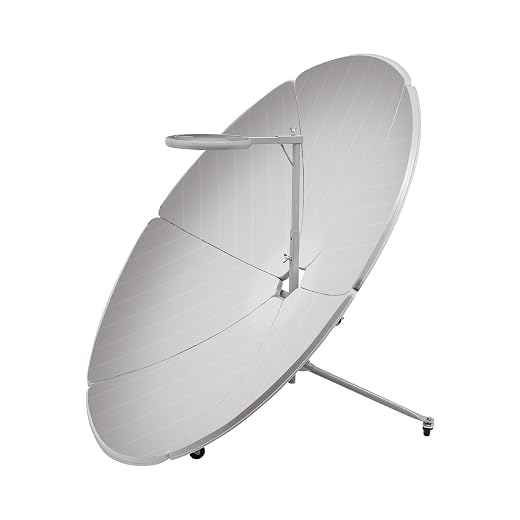
59'' Portable Parabolic Solar Cooker 1800W Power
Fast, fuel-free cooking with oven-level heat
You get oven-level heat from the sun so you can grill, boil, and sear without gas, smoke, or soot. It’s rugged, cleans with a quick wipe, and lets you cook fast outdoors without the usual mess or fuel hassle.
Want hot food or a slow bake? Your oven and placement decide the magic.
Choose a solar oven that matches your crew size and patience. A box oven with reflectors is forgiving and great for stews, casseroles, and baking. A parabolic oven heats fast but demands steady aiming—use it only if someone can track the sun. For 4–6 people, a medium box oven or two small boxes usually works.
Pick a flat, sunny spot — clear sky for at least three hours.
Face the oven toward the sun — angle reflectors to send light into the pan.
Avoid shade — keep away from trees, tents, and moving shadows.
Scout and set up now so cooking starts on time and you skip cold meals.
Eco-Friendly Pick
High-Efficiency 1800W Parabolic Solar Cooker for Camping
Green cooking with oven-level temperatures
You cut your fuel needs and cook with amazing heat using just sunlight, perfect for picnics or power outages. It breaks down for easy storage, lets you tweak the heat, and gives reliable fire-free meals in the wild.
Why overcomplicate? One pot can feed five — and tastes amazing.
Choose recipes that love slow, even heat and prep smart so dinner smells amazing before you even sit down.
Make crowd-pleasers: chili, stews, baked potatoes, or foil-wrapped fish and veggie trays.
Chop ingredients evenly so everything finishes at the same time.
Use pre-cooked grains or canned beans to cut time and stress.
Season boldly — solar cooking can mute flavors, so be generous.
Pack a tight lid or foil to trap heat and steam.
Let simple recipes mean less babysitting and more time enjoying the view while your crew smells dinner coming.
Kitchen Essential
Umite Chef 5QT Enameled Cast Iron Dutch Oven
Ideal for baking, braising, and slow cooking
You’ll make tender stews, crusty bread, and perfect roasts because this heavy enamel cast iron holds and spreads heat evenly. The tight lid locks in flavor, the surface wipes clean, and the included mitts keep handling safe and stress-free.
Want juicier meat and fewer cold spots? Insulation is your secret weapon.
Place dark, thin-walled pots in your solar oven so food heats faster. Preheat the oven for 20–30 minutes if you can — I preheated once and cut stew time in half. Nest pots with padding like towels or crumpled paper to hold heat and prevent cold spots.
Preheat 20–30 minutes to build steady heat.
Nest pots with padding (towels, crumpled paper) to retain warmth.
Seal gaps with tape or extra plastic to trap heat.
Check temps with a thermometer so you know food is safe.
Use these small steps to stop wasted heat and keep picky eaters from getting disappointed by uneven cooking.
You get instant, accurate oven readings without batteries so you stop guessing and stop ruined meals. Hang it or set it on a rack—it’s tough, clear to read, and built to help you nail temps every time.
Think like the sun: adjust, rotate, and relax — your oven is not a stove, it’s a patience game.
Check the sun’s angle every 30–60 minutes and re-angle reflectors to follow it.
Cover pots and move them to a pre-warmed insulated cooler if clouds roll in so food keeps finishing with steady heat.
Start dishes earlier than you’d expect and prep quick snacks so your crew doesn’t get hangry.
Imagine steering reflectors like a sail—re-aim after a coffee break and watch stew climb to simmer.
Let time become less about rush and more about rhythm so your crew appreciates the relaxed pace when dinner arrives steaming and cooked through.
Check sun every 30–60 minutes — re-angle reflectors as the light shifts.
If clouds appear, cover pots & move to a pre-warmed insulated cooler — keep heat trapped.
Start early & have snacks ready — prevent hunger meltdowns and buy cooking time.
Outdoor Staple
Coleman Classic Insulated Hard Cooler Keeps Ice Longer
Seat-ready lid, holds up to 80 cans
You keep ice and cold drinks longer so your food and beverages stay fresh on long trips and backyard hangs. The lid doubles as a strong seat with cup holders and swing-up handles make it easy to carry and chill worry-free.
You just fed a crew on sunlight — yes, celebrate and share that bragging right.
Check food temps with a probe or by stirring — stews should simmer and veggies be fork-tender. Stir stews to test doneness; if steam rises and chunks fall apart, they’re ready. Let baked goods rest inside the closed oven 10–20 minutes so residual heat finishes them.
Plate portions right away so everyone gets hot food and stays happy—cold plates kill morale. Tell the quick story: you cooked this with the sun, saved fuel, and kept the camp calm.
Check temps — probe or stir to confirm doneness.
Let rest — baked items finish in residual heat.
Plate hot — serve immediately to keep crew warm.
Train one person — teach them angling and temp checks so you can relax next time.
Survival Essential
SolCook All-Season Foldable Solar Cooker Dehydrator
Portable and perfect for camping or emergencies
You can cook, bake, or dehydrate with sunlight so you don’t need fuel on trips or during outages. It folds light for easy packing, stands up to outdoor use, and saves you money while letting you eat hot food anywhere.
With a little planning and sunlight, you’ll serve warm, tasty meals that wow the crew—try one recipe, snap a photo, share your story, and earn major campsite cred. Go cook!
This post contains affiliate links. Purchases may earn me a commission at no extra cost to you.
James Fannin
21 thoughts on “5 Easy Steps to Feed Your Crew with a Solar Oven”
Marcus Chen says:
Quick question: the guide says ‘pick the right spot’ — any rules of thumb for urban settings where rooftops are limited?
Good question, Marcus. Look for the sunniest open patch for the longest continuous stretch (preferably 10–12am to 3pm). Rooftop HVAC units can create thermal drafts, so steer clear if possible. Balcony setups can work if there’s clear sky and you can safely secure reflectors.
Tom Evans says:
I think the insulation section could use a line about fire safety. Towels and paper are okay, but don’t let anything touch the heating element (if using a hybrid).
Aisha Patel says:
Tried the pasta + tomato sauce recipe from step 2 at a community meet-up. Crowd-pleaser and minimal babysitting.
One small nit: the guide’s serving sizes felt small for big appetites.
Good point, Aisha. We’ll add scaling tips and a quick ‘party portions’ table so organizers can plan for hearty eaters.
Sophie King says:
Yup, scale up the sauce and do two pans. Also add extra bread/garlic — carbs fix everything 😂
Mia Harper says:
Love this guide — super practical!
I tried a small box solar oven once and it was surprisingly easy to scale up for a group.
A couple of thoughts: reflectors make a huge difference (foil + cardboard = magic), and starting with soups/rice is less risky than roasting a whole chicken first time.
Also, watch those wind gusts when you set your spot — I learned that the hard way 😂
Great reminder about food safety at the end, too. Saved me from a bad salad experiment.
Leo Park says:
Totally agree on the soups/rice start. I did a baked beans batch for a group of 10 and it was foolproof. Pro tip: preheat with an empty pot for 20 mins to warm the oven before loading.
Thanks for sharing your experience, Mia — love the reflector tip. If you have a photo of your setup, people here would probably appreciate seeing it!
Olivia Grant says:
Wind = nightmare. I duct-taped my reflector once… not my proudest moment but it worked 😂
Noah Brooks says:
This was such a fun read. A couple of practical notes from someone who does weekend outdoor events:
– Bring a cheap instant-read thermometer — saves arguments about doneness.
– Mark the time you put food in and set a phone reminder to rotate the oven with the sun.
– If you’re feeding kids, have a safe ‘taste tester’ system so everyone stays out of the hot box.
Also, shoutout to the bit about celebrating the win — the crew morale boost is real.
Love these organizational tips, Noah. We’ll add a short checklist for event leaders (thermometer, timers, safety person) to the guide.
Daniel Ortiz says:
Phone reminder tip saved me once when I got distracted. Set a 30–45 min check and you’ll thank yourself.
Emily Zhao says:
Oh man the ‘taste tester’ system is genius. We had two people argue over who could poke the food last time 😂
Maya Singh says:
If you can, label utensils ‘hot’ vs ‘serving’ — avoids cross-contamination and burned fingers. Simple but effective.
Natalie Rivera says:
I appreciate the step-by-step — it’s broken down so non-tech people can follow.
Tried the ‘load and insulate like a pro’ advice last weekend: wrapped a casserole dish in a towel inside the oven box and the temp held for ages.
One constructive note: timeline estimates felt optimistic for cloudy mornings — maybe add a short troubleshooting section for partial sun?
Also, anyone else ever use black-painted cans for faster heating? Curious how that compares to glass dishes.
Thanks for the celebration/serve section — made our little victory feel official!
Priya Desai says:
I used black-painted cans for chili once. Worked ok but needed longer time than the recipe suggested. Also, don’t forget a meat thermometer if you’re doing proteins!
Javier Morales says:
Totally +1 on adding troubleshooting. Clouds turned my mac and cheese into a lukewarm… surprise. 😂
Ben Carter says:
Partial sun tip: try smaller, shallower dishes — they heat faster. And yep, black surfaces help but glass retains heat better for longer cooks.
Great feedback, Natalie. Adding a troubleshooting tip for partial sun is a smart idea — we’ll update the guide. Black-painted cans can work but watch for paint fumes; pre-bake them empty first to off-gas any solvents.






Quick question: the guide says ‘pick the right spot’ — any rules of thumb for urban settings where rooftops are limited?
Good question, Marcus. Look for the sunniest open patch for the longest continuous stretch (preferably 10–12am to 3pm). Rooftop HVAC units can create thermal drafts, so steer clear if possible. Balcony setups can work if there’s clear sky and you can safely secure reflectors.
I think the insulation section could use a line about fire safety. Towels and paper are okay, but don’t let anything touch the heating element (if using a hybrid).
Tried the pasta + tomato sauce recipe from step 2 at a community meet-up. Crowd-pleaser and minimal babysitting.
One small nit: the guide’s serving sizes felt small for big appetites.
Good point, Aisha. We’ll add scaling tips and a quick ‘party portions’ table so organizers can plan for hearty eaters.
Yup, scale up the sauce and do two pans. Also add extra bread/garlic — carbs fix everything 😂
Love this guide — super practical!
I tried a small box solar oven once and it was surprisingly easy to scale up for a group.
A couple of thoughts: reflectors make a huge difference (foil + cardboard = magic), and starting with soups/rice is less risky than roasting a whole chicken first time.
Also, watch those wind gusts when you set your spot — I learned that the hard way 😂
Great reminder about food safety at the end, too. Saved me from a bad salad experiment.
Totally agree on the soups/rice start. I did a baked beans batch for a group of 10 and it was foolproof. Pro tip: preheat with an empty pot for 20 mins to warm the oven before loading.
Thanks for sharing your experience, Mia — love the reflector tip. If you have a photo of your setup, people here would probably appreciate seeing it!
Wind = nightmare. I duct-taped my reflector once… not my proudest moment but it worked 😂
This was such a fun read. A couple of practical notes from someone who does weekend outdoor events:
– Bring a cheap instant-read thermometer — saves arguments about doneness.
– Mark the time you put food in and set a phone reminder to rotate the oven with the sun.
– If you’re feeding kids, have a safe ‘taste tester’ system so everyone stays out of the hot box.
Also, shoutout to the bit about celebrating the win — the crew morale boost is real.
Love these organizational tips, Noah. We’ll add a short checklist for event leaders (thermometer, timers, safety person) to the guide.
Phone reminder tip saved me once when I got distracted. Set a 30–45 min check and you’ll thank yourself.
Oh man the ‘taste tester’ system is genius. We had two people argue over who could poke the food last time 😂
If you can, label utensils ‘hot’ vs ‘serving’ — avoids cross-contamination and burned fingers. Simple but effective.
I appreciate the step-by-step — it’s broken down so non-tech people can follow.
Tried the ‘load and insulate like a pro’ advice last weekend: wrapped a casserole dish in a towel inside the oven box and the temp held for ages.
One constructive note: timeline estimates felt optimistic for cloudy mornings — maybe add a short troubleshooting section for partial sun?
Also, anyone else ever use black-painted cans for faster heating? Curious how that compares to glass dishes.
Thanks for the celebration/serve section — made our little victory feel official!
I used black-painted cans for chili once. Worked ok but needed longer time than the recipe suggested. Also, don’t forget a meat thermometer if you’re doing proteins!
Totally +1 on adding troubleshooting. Clouds turned my mac and cheese into a lukewarm… surprise. 😂
Partial sun tip: try smaller, shallower dishes — they heat faster. And yep, black surfaces help but glass retains heat better for longer cooks.
Great feedback, Natalie. Adding a troubleshooting tip for partial sun is a smart idea — we’ll update the guide. Black-painted cans can work but watch for paint fumes; pre-bake them empty first to off-gas any solvents.
Thanks everyone — we’re compiling a short FAQ for ‘low-visibility’ days and common material swaps (like metal vs glass). Stay tuned!