

Blog
Choose Your Trail Buddy: Suunto Core vs ProTrek
May
Which wristwise sidekick will keep you safe when trails get ugly and actually make navigation fun—are you team Suunto Core’s rugged smarts or ProTrek’s high‑tech tricks?
Fact: a dead watch ruins a hike. You want a watch that won’t quit on a ridge or a rainy trail. This guide pits the Suunto Core and Casio ProTrek so you can pick the one that calms your worries.
Rugged Classic
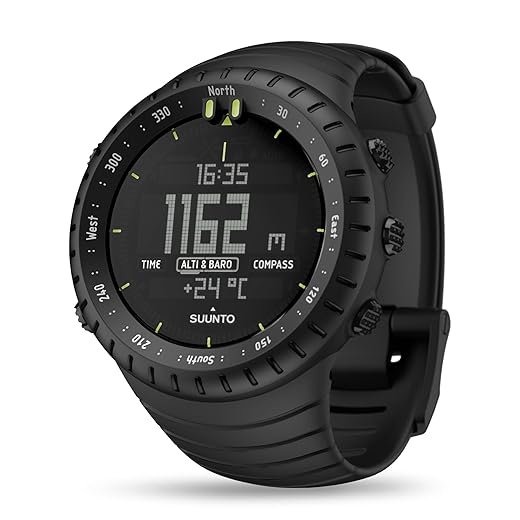
You get a tough, no-nonsense outdoor tool that keeps you aware of weather and altitude without needing a phone. It’s perfect when you want reliable sensors and a simple power setup, but expect to baby the display in low light and handle battery swaps carefully.
Solar Navigator
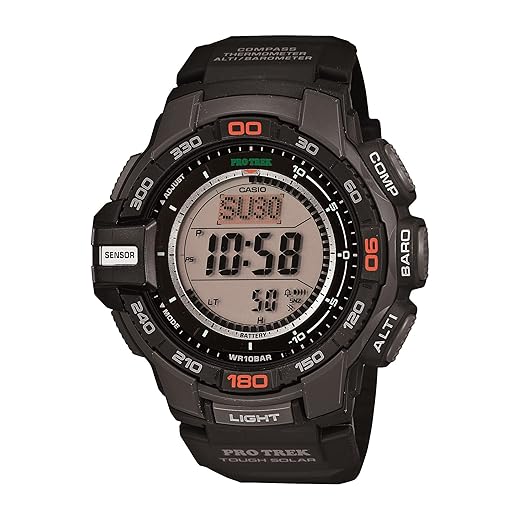
You get a solar-powered outdoor watch built for long trips and fast decision-making—its sensors are fast and battery worry disappears. If you want the most uptime and clear sensor readouts on the trail, this is a strong pick, though the face can look busy and the stock strap isn’t to everyone’s taste.
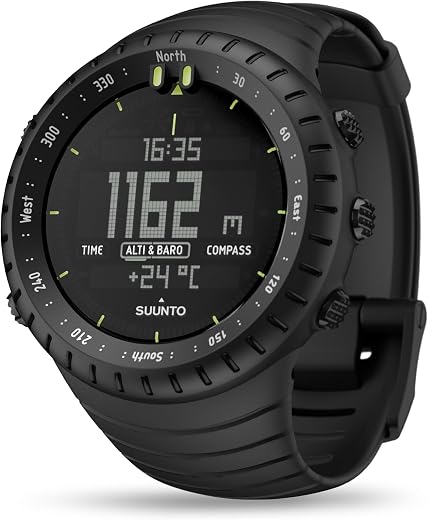
Suunto Core Classic
Casio ProTrek PRG
Suunto Core Classic
Casio ProTrek PRG
Suunto Core Classic
Casio ProTrek PRG
Core Features & Trail-Ready Tech
Altimeter, Barometer & Compass
When the trail disappears in fog, you want instant, reliable readings. Suunto Core gives you altimeter, barometer and a storm alarm that yells “pay attention” when pressure drops. Casio ProTrek packs Triple Sensor v3: altimeter in 1m steps, a barometric tendency alarm, and a compass with 60 seconds continuous bearing — more detail when weather turns.


Sensors & Accuracy
You’ll notice the difference when the weather swings. Casio’s newer, low-power sensors are tuned for tighter, faster readings — great if you want trend alerts and precise altitude. Suunto’s sensors are solid and proven; they lean on simplicity and clear alerts (storm alarm and sunrise/sunset predictions) so you don’t overthink.
Build Toughness
You don’t baby these watches. Suunto feels rock-solid and chunky — it survives knocks and mud. Casio’s case and big buttons are made for harsh use too, with 100m water resistance and a resilient resin build.


Display & Battery Habits
If screen glare stresses you, note this: Suunto’s display can be harder to read in some light, but it runs on a user-replaceable battery so you’re not hunting chargers. Casio’s Super Illuminator backlight beats darkness, and Tough Solar keeps the watch topped up — roughly nine months off light on a full charge.
Feature Comparison Chart
Real-World Use: Comfort, Controls, and Reliability
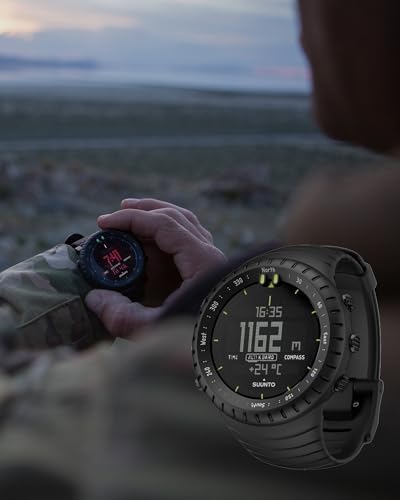
Suunto Core — how it feels on trail
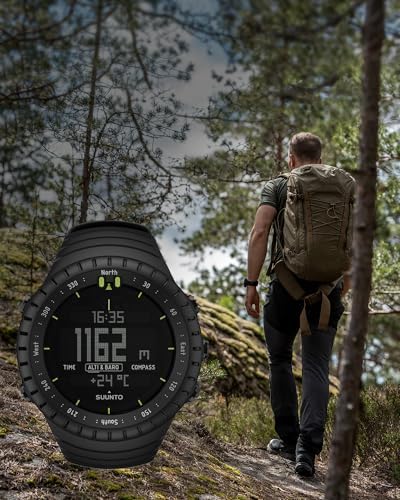
The Core sits solid on your wrist — chunky but reassuring. The silicone strap is grippy and won’t flop when you scramble; it’s comfy for long days. The screen and menus are straightforward, so you don’t fumble with buried settings while hiking.
Casio ProTrek — how it feels on trail
ProTrek is lighter and feels less bulky. The resin band is flexible, so it’s easy to forget you’re wearing it. Big side buttons are a joy when you’ve got gloves on or when your hands are cold.


Buttons & glove-friendly use
If you wear gloves, Casio wins: large, one-press sensor buttons are fast and fail-safe. Suunto’s buttons are smaller and require a bit more focus, but they’re still usable with thick gloves if you press deliberately.
Screen visibility & night use
Casio’s Super Illuminator backlight lights the whole face — perfect for dawn starts. Suunto’s display is clearer in steady daylight but can be tougher in low sun or angled light.
Settings, nags, and what just works
You want a watch that won’t distract on long days. Quick checklist:
Value, Style, and Which One Matches Your Adventure
Match your vibe
You want a watch that feels like part of your kit, not a headache. Suunto Core brings that clean, classic look and simple trust. Casio ProTrek brings rugged tech and solar power so you stop worrying about dead batteries.
Quick persona picks
Money, worry, and peace of mind
You can spend a little more for Suunto’s straightforward reliability and heritage feel. Or you can save cash and gain near-limitless run-time with Casio’s Tough Solar and modern sensors. If battery anxiety or gloved-button use keeps you up, pick Casio. If you want a watch that’s calm, clear, and classy on your wrist, pick Suunto. Stop overthinking — pick the one that fixes the pain you hate most on trail.
Final Verdict: Choose Your Trail Buddy
For most hikers, the Casio ProTrek is the winner — its solar top-up, long battery life, and sensors keep you confident on trips.
Pick the Suunto if calm, clean info eases your trail anxiety — otherwise grab ProTrek and go feel unstoppable.

I’ve been using a Suunto Core (older model) for a few years and honestly it’s been rock solid.
– Altimeter is pretty reliable for day hikes
– Barometer + storm alarm saved me from a surprise thunderstorm once
Looks sharp enough for casual wear too. Only gripe: the display can be a bit dim in low light and the buttons feel stiff sometimes. Worth the price if you want something simple and rugged 🙂
Do you find the strap wears quickly? I’ve heard Suunto bands can fray after heavy use.
Totally this. Had a Core for two seasons, loved the barometer. For nighttime I just used a headlamp to hit the buttons lol
Thanks for the hands-on insight, Laura — exactly the kind of real-world feedback I hoped readers would share. In the article we noted the Suunto display is not as bright as some Casio models, but it’s great that the storm alarm proved useful for you.
Anyone know about battery replacement costs for the Suunto? I can’t find clear info. If it’s expensive, that pushes me to Casio too.
Good point, Carlos. Suunto Core uses a user-replaceable battery but some models require service to maintain water resistance — that can add cost. Casio’s solar eliminates that worry. We linked support pages in the article with more specifics.
Long post incoming — tried to keep it concise but here we go:
I compared both on a backpacking trip last month. Suunto wins for the minimalist outdoor look and the altimeter felt a hair more consistent when I was gaining elevation quickly. Pro Trek wins on practicality: solar charging (huge), the digital display is easier to read in bright sun, and the triple sensor is very dependable.
Also: Pro Trek’s compass calibration was easier to do in the field. Suunto’s menu felt clunkier but the back-up of its storm alarm is legit. If I had to pick one for thru-hiking? Probably the Casio for the battery life and readability.
PS: The Suunto vibe is sexier though. Not ideal logic but true 😂
Replying to Jacob: I did a quick check at a trailhead with a marked elevation and recalibrated both watches before starting. Suunto drifted less on steep climbs that day.
Sexier vibe = sold. jk, but really I care more about battery than aesthetics.
Great detailed comparison, Samantha — thanks for breaking down field experience. We tried to reflect your points in the practical pros/cons section.
Curious: did you test the altimeter against a known elevation point or GPS? I’ve found altimeters need frequent recalibration.
Agree on readability. Sun = Pro Trek wins, night = Suunto kinda loses unless you have a light.
If battery life is king for you, go Pro Trek. Tough solar + rechargeable cell = almost forget about swapping batteries.
Casio’s sensors are surprising for the price. Not as slick UI-wise as Suunto but way more value imo.
Quick question — how readable is the Suunto Core at dusk? I wear glasses and tiny displays kill me.
I like the idea of the Suunto’s styling, but if I can’t read it without taking my glasses off, that’s a dealbreaker.
Good question. Suunto’s display is lower-contrast than the Pro Trek’s LCD; in dusk you might need a light. We recommend trying it on in-store if possible. If readability is essential, the Pro Trek’s display backlight and higher contrast tend to be better.
I wear progressive lenses and find the Casio screen easier — the numbers are bolder. Suunto is prettier but harder to read from an angle.
Lol I almost bought a watch to replace my phone as my compass so I’d stop asking my dog which way to go 😂
Serious note: I love how cheap the Casio feels while still doing all the things. The Suunto feels like a “proper” outdoor tool but costs a lot more. If you’re clumsy (me), Pro Trek tolerates knocks and dirt like a champ. Also, the altitude graph on the Suunto looked cooler when my boyfriend tried it, but he also overanalyzes barometric blips, so 🤷♀️
Ha — dog compass is underrated. Appreciate the humor and the point about ruggedness; we noted Casio’s build vs price is a strong selling point.
Pro Trek strap feels more utilitarian. Suunto has nicer finishing but yeah, less forgiving if you bang it.
Also, Casio’s solar + never changing battery life = less gear anxiety. Highly underrated.
I love the Casio for the same reason. Dropped it once in mud, rinsed it, still fine.
Replying to Carlos: Good to know — I’m a strap breaker so I’ll probably get the Pro Trek then.
If you’re clumsy and want lower fuss, Casio all the way. Suunto is for people who baby their gear a bit more 😉
Planning a 2-month thru-hike and stuck between these two. Weight matters, but so does reliability. Any final recs?
I lean toward Pro Trek because of the solar, but worried about sensor accuracy vs Suunto.
Also how do they handle long-term comfort on the wrist? I sleep with my watch sometimes.
For a long thru-hike I’d recommend the Pro Trek for the solar battery and lower maintenance. Both will handle the sensors fine if you recalibrate occasionally, but Pro Trek’s readability and battery system reduce mental load on long trips.
If you prefer lighter/less bulky, double-check weights — Suunto can feel slimmer on the wrist, but you sacrifice the solar benefit.
I slept with my Pro Trek on a few nights — comfortable enough. It’s a hair chunkier than some watches but not annoying.
Pro tip: carry a tiny strap extender or swap to a softer band for sleeping if you’re sensitive. Both watches accept aftermarket straps.