

Emergency Supplies
Which Fire Starter Works Best in Wet Weather?

Sep
Rain does not merely dampen a fire lay; it changes the entire ignition problem.
A cold shower, dripping sleeves, and a pile of wood that feels dry only on its outer bark create a narrow, stressful window: a fire may be needed for warmth, visibility, or signaling, yet ordinary tinder can fail before flame ever reaches the fuel.
Wet-weather performance is not one trait. A starter must resist absorbing water during storage, accept a spark or flame reliably with wet hands and compromised technique, then burn long and hot enough to dry and ignite progressively larger material. Waterproof matches may light dependably but offer only a brief flame; a ferro rod makes sparks after immersion but still needs receptive tinder. Waxed plugs are designed to bridge that gap, though their value depends on how readily their fibers are exposed and how long they sustain flame.
- A usable wet-weather fire needs a protected ignition source, prepared tinder, and increasingly dry fuel—not merely a water-resistant starter.
Three practical ways to cover a wet-weather fire


Wet-weather kits work as a system: protected ignition, dry manufactured tinder, and enough flame duration to warm pencil-thin kindling before asking larger wood to burn. Store those components in separate waterproof sleeves; one flooded container should not disable the entire kit.
What a Wet-Weather Test Should Prove
-
Protected storage and soaked fuel
Test the container after rain exposure, then test individual fuel pieces after direct soaking. Record how many ignition attempts succeed; a watertight case does not prove that the fuel itself can establish flame when wet.
Look forSealed storage plus a fuel that lights after soakingAvoidPackaging claims standing in for wet-fuel performance -
A usable fire, not merely a spark
Use cold hands, steady wind, and damp kindling. Measure whether the starter can be handled and lit, how long it burns, and whether its heat dries and catches marginal material without requiring a separate dry tinder source.
Look forWind-tolerant flame with enough duration to bridge damp tinderAvoidBrief sparks or flames dependent on pristine companion materials
A match may survive inside a watertight case yet fail after its head is submerged. Conversely, a fire plug can remain useful after soaking but still need a reliable ignition source. Testing must expose both the storage system and every component needed to make flame.
Black Beard Fire Plugs: a sustained heat bridge
Best for dependable ignition in persistently wet conditions
A fire plug is not simply a spark catcher. Its fibrous, wax-based body keeps a small ignition source alive long enough to dry and ignite marginal material in stages: fine shavings first, then pencil-thick twigs, then split kindling. That extended transition matters when every natural fuel surface is damp.
Black Beard Fire Plugs suit kits built around reliable, repeatable tinder rather than scavenged dry material. The plug should be lit under a lid, tarp edge, or other windbreak; weatherproof storage does not make an exposed flame immune to gusts or heavy rain.
- Long burn supports staged fuel building
- Fibrous material can be teased apart
- Weatherproof format suits stored kits
- Compact individual tinder portions
- Each fire consumes a plug
- Needs a sheltered ignition point
- Still requires prepared, progressively larger fuel
- Less useful once the supply is exhausted
Quick take Long-burning plugs provide a practical heat reserve after the first flame catches. They are most valuable when damp kindling needs time—not merely a spark—to become self-sustaining.
Stormproof matches for low-dexterity deployment
Best for compact emergency and survival kits
Stormproof Waterproof Matches with Watertight Case offer a familiar, direct-flame fallback for a sealed kit. A match can be struck and placed into prepared tinder with less fine motor control than a ferro rod, which can matter with cold, wet hands.
Their role is limited but valuable: preserving an independent ignition method rather than replacing a fuel-rich fire starter. The match should be paired with dry, easily lit tinder; a brief flame has little margin for damp shavings or unprepared wood. Before packing, inspect the case seal and striker, since either failure can turn an apparently protected kit into dead weight.
- Direct flame with familiar handling
- Useful with reduced hand dexterity
- Sealed case supports kit storage
- Wind-oriented flame buys tinder time
- Every strike consumes one match
- Striker condition is mission-critical
- Case seal needs periodic inspection
- Brief burn still needs receptive tinder
Repeatable sparks for a prepared tinder bundle
Best value for repeat-use fire starting outdoors
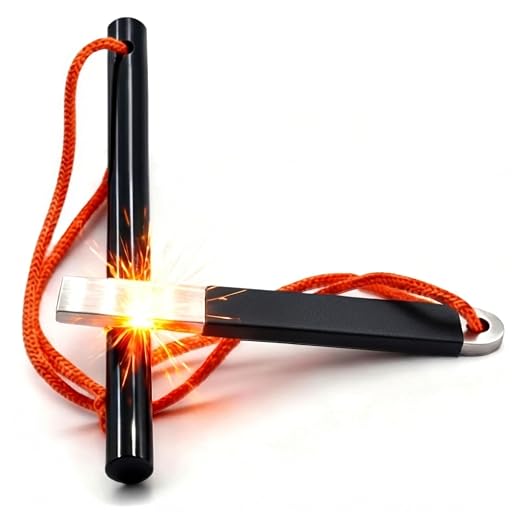
Unlike a match or fire plug, a ferro rod produces a shower of hot sparks—not a sustained flame. This compact 4-inch rod suits people who carry prepared tinder and want a long-service, low-cost ignition tool alongside a wet-weather flame source.
The rod can still spark after getting wet; wipe away surface water and expose a clean section before striking. The limiting factor is the tinder. In rain, shave dry material from inside split wood, protect it under clothing or a pack lid, and make a loose, thumbnail-sized nest before striking. Scrape a little ferrocerium dust into that nest, then use one firm, controlled stroke while holding the rod still. If sparks scatter or die, the usual fix is a sharper striker edge, drier finer tinder, or a more sheltered angle. More ferro rod troubleshooting in the field matters than simply striking harder.
- Thousands of potential strikes from one compact rod
- Works after surface wetting once wiped clean
- Does not depend on a fuel-filled case
- Creates sparks, not a drying flame
- Fine, protected tinder remains essential
- Technique can be difficult with cold hands
| Most suitable for | Margin with damp kindling | Deployment | Preparation needed | ||
|---|---|---|---|---|---|
|
Black Beard Weatherproof Fire Plugs, 50-Pack
Damp-fuel bridge
|
Wet hike fuel | Light, then stage | Moderate | View | |
| Vehicle kit | Strike and shelter | Low | View | ||
|
Portable Ferro Rod with Stainless Steel Striker
Practice tool
|
Prepared backcountry | Spark into tinder | High | View |
For a rainy day hike, a fire plug offers a useful heat reserve: it can keep burning while progressively smaller, damp sticks are introduced. In a vehicle or evacuation kit, stormproof matches are a sensible quick, low-dexterity backup, provided the case, striker, and tinder are checked periodically.
A ferro rod fits a practiced backcountry system rather than a last-minute rescue plan. Its rod may tolerate soaking, but its sparks do not dry or organize fuel. Pair it with dry, fine tinder in a separate waterproof pouch, and practice shielding the bundle from wind before relying on it in cold rain.
Build a rain-fire system around the starter
-
Pack two sealed ignition layers
Keep the primary starter in a waterproof inner pouch, then place it inside a hard case or roll-top outer bag. Store stormproof matches separately, so one flooded or lost container does not end the attempt.
-
Protect a dry tinder reserve
Carry fine, ready-to-light tinder in a small rigid vial or zip pouch: waxed fibers, treated cotton, or commercial tinder tabs. A ferro rod is dependable only when this reserve stays dry enough to catch its sparks.
-
Create a dry working surface
Before lighting anything, split a wrist-thick stick and use its dry interior as a base. Lay bark, a pack liner, or a flat piece of wood beneath the tinder to isolate it from saturated ground.
-
Process fuel from the inside out
Snap or baton dead, standing wood to expose pale inner fibers; then shave curls, pencil-size kindling, and progressively thicker pieces. The practical sequence for getting a fire established after rain begins with this fuel ladder, not with a larger flame.
-
Light once the bundle is complete
Stage enough fine fuel to absorb the starter’s full burn, shield the flame from gusts, and add kindling without crushing it. Reserve a second ignition source rather than spending it on a poorly prepared bundle.
A fire plug can buy drying time, while a match or ferro rod provides redundancy; none can dry a pile of waterlogged fuel on its own.
Rain-darkened sticks may look usable yet contain too much moisture at the surface for early flame growth. Split material, make feathered shavings from the dry core, and gather more fuel than seems immediately necessary before committing a limited starter.
Buy a system, not a single spark
- Keep the ignition source and tinder in separate waterproof layers so one wet failure does not disable both.
- Practice lighting the chosen tinder with cold hands and limited fine motor control before relying on it outdoors.
The sound wet-weather purchase is a protected ignition source paired with tinder that burns long enough to dry and catch progressively larger fuel. Fire plugs suit that heat-bridge role; stormproof matches offer simple sealed redundancy; a ferro rod remains useful when a dry, finely prepared tinder bundle is already part of the kit.
For trips where an unplanned night outdoors carries greater consequences, fire gear should sit within a broader shelter, water, signaling, and evacuation plan—not serve as the plan itself.

