

Blog
Jackery Explorer 300: Portable Power Station for Camping

May
Lightweight, quiet power that keeps your phones, lights, and cooler alive — peace of mind on the trail and during blackouts.
Nothing kills a perfect campsite faster than dead batteries and a cold cooler. You want to stay connected, keep your lights on, and not worry about your phone, camera, or mini-fridge giving up on you—especially when you’re miles from help. Enter the Jackery Explorer 300: a compact, ~7 lb portable power station that slides into your gear and keeps the essentials running.
With the Explorer 300 in your pack, you get real peace of mind. It charges fast with USB‑C PD, offers clean AC power, and has enough juice to keep your lights, laptop, and fridge humming through the night. It won’t run heavy appliances all day, but for camping, travel, and short blackouts, it makes powering small gear worry‑free and simple.
Jackery Explorer 300 Portable Power Station

You get a reliable, lightweight battery that makes powering small devices on the trail or during outages worry‑free. It won’t run big appliances for long, but it covers lights, phones, laptops, fridges, and cameras with style.
Jackery Explorer 300 — What it Brings to Your Next Trip
You know that feeling when your phone, camera, or small fridge dies and you’re miles from a plug? The Jackery Explorer 300 is built to solve that exact panic. It’s a compact, easy‑to‑carry power station that gives you clean AC power and modern USB outputs so you can stay charged, connected, and comfortable outdoors or during a blackout.
Why you’ll feel safer with one in your pack
The Explorer 300 is light enough to sling over your shoulder but powerful enough to handle a handful of essential devices. It focuses on practical, everyday usefulness: recharging phones, running a small CPAP for a short stretch (check your model’s draw!), powering a mini cooler, or giving your laptop enough life to edit photos at camp.
Key features at a glance
| Feature | Why it matters to you |
|---|---|
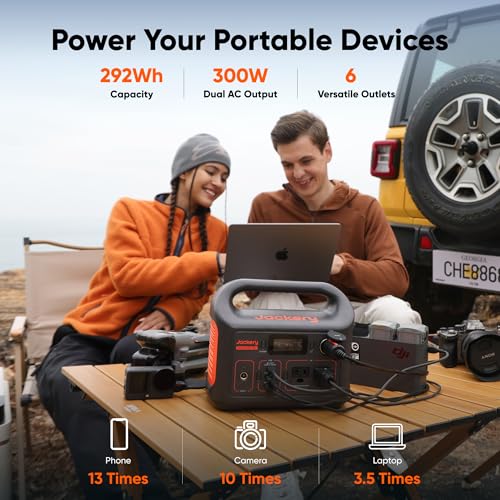
| ~292Wh capacity | Long enough for overnight or a full day of light use without hauling a heavy generator |
| 300W pure sine wave AC | Safe for sensitive electronics like laptops and some medical devices |
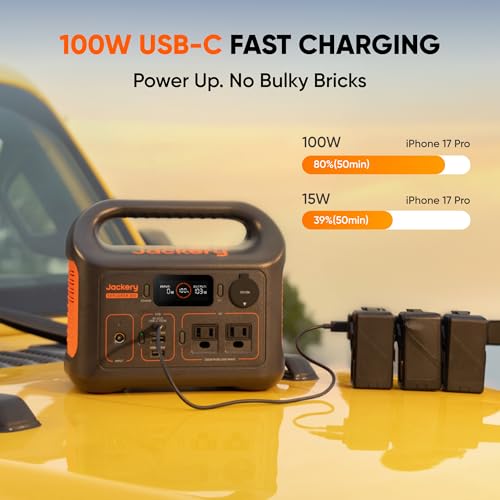
| 60W USB‑C PD (in/out) | Fast charging for modern laptops and phones; you can also use it to recharge the unit faster |
| Multiple ports (AC, USB‑A, USB‑C, car DC) | Charge up to 6 devices at once — lights, cameras, phones, and more |
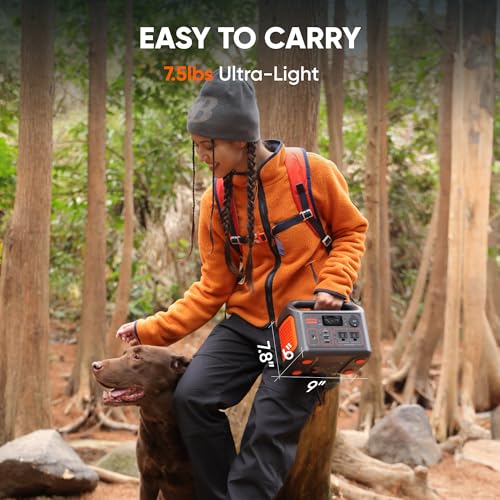
| Lightweight (≈7 lbs) | Carry it without feeling like you’re lugging a toolbox |
| Solar compatible (MPPT) | Recharge using the sun for true off‑grid freedom |
Real world you-can-do list
Charging options and speed — spend less time waiting
You don’t want to sit around waiting for a power bank to juice up. This unit is designed to cut charging time down:
These options mean you can get back to adventuring faster — charge in the hotel, while driving, or from the sun at camp.
Ports and what you can plug in
| Port | Typical devices you’ll run |
|---|---|
| 2 × 110V AC pure sine wave outlets (300W) | Laptop, TV, small coffee maker (short bursts), lamps |
| 1 × 60W USB‑C (PD) | MacBook, USB‑C laptops, fast phone charging |
| 1 × Quick Charge USB‑A | Phones, power banks |
| 1 × USB‑A standard | Cameras, small gadgets |
| 1 × 12V car port | Car fridges, some LED lights |
Build, feel, and portability
You’ll notice the Explorer 300 feels sturdy without being bulky. It’s built with soft edges, a comfortable carry handle, and a compact footprint that fits easy in a car trunk or the back of a pickup. The display is simple — it tells you watt draw and estimated time remaining, so you always know how long you’ve got.
Safety and battery life details
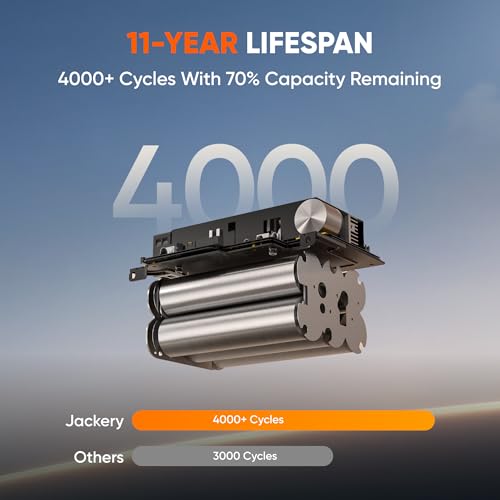
Jackery outfits the unit with protections against overvoltage, short circuits, and overheating. The battery chemistry (long‑life cells) is chosen to balance runtime with cycle life so the station will still be useful for years if you treat it right — avoid leaving it at extreme temps and store it partially charged for long periods.
What this is not — set expectations
This isn’t a whole‑house generator. You won’t run a full‑size fridge, electric heater, or power tools for long. The 300W AC limit means heavy loads will trip or drain the battery quickly. Think of it as your emergency lifeline and campsite charging hub, not your garage workhorse.
Ideal use cases — pick the one that fits you
Tips to squeeze more runtime
Quick spec snapshot
| Stat | Value |
|---|---|
| Capacity | ~292Wh |
| AC Output | 300W continuous, pure sine wave |
| Weight | ~7.1 lbs |
| Recharge | AC, car 12V, USB‑C PD, solar (MPPT) |
| Ports | 2 AC, USB‑C PD, QC USB‑A, USB‑A, 12V car |
Final outdoor savvy take
If you want a fuss‑free, compact power pack that gives you real capability without a heavy price or a noisy engine, this is a smart pick. You’ll love the fast recharges, the clean AC power for sensitive gear, and the fact that it’s light enough to move around without asking for help. It’s the kind of gear that quietly makes trips less stressful — and when the lights go out at home or on the road, it turns worry into workable power.
FAQs
It depends on the fridge and the mode, but for a typical 12V mini fridge in eco mode you can expect anywhere from 10 to 20 hours on a full charge. Heavy duty fridges and warm ambient temps will shorten runtime, so check your fridge’s watt draw and divide the station’s usable watt‑hours accordingly.
Yes — the USB‑C PD port supports input and output. That means you can use a USB‑C wall charger to top up the unit faster, and you can also charge your laptop or phone from the same port when the pack has energy available.
Absolutely. This is a battery‑powered device with no fumes or gas, so it’s safe for indoor use. Just keep it on a flat surface with good airflow and avoid covering the vents while it’s charging or discharging.
No — the Explorer 300 isn’t designed to deliver the high current needed to jump a car battery. It’s great for charging electronics and running small appliances, but don’t expect it to replace a dedicated jump starter.
Solar charging will still work in cloudy conditions but at reduced rates. The built‑in MPPT controller helps maximize whatever sunlight you get, but plan for slower recharge times on overcast days and consider bringing extra panel capacity if you’ll be off grid for several days.
Many lightweight CPAP machines can run for a night or two depending on their watt draw and whether you use heated humidification. Always check your CPAP’s power consumption and test at home so you know how long the unit will support your setup.
Store it partially charged (around 50%), avoid extreme temperatures, and cycle it regularly. Fast recharges are convenient, but avoid leaving it at 0% for long periods. These steps help keep the battery healthy for years.
Treat it like a small duffel: keep it protected from rough gear, pack it near the center of weight in your vehicle, and use the built‑in handle for short carries. For long hikes, consider a lighter power bank — this unit shines for short carries and car‑camp setups.

Nice review, but I’d like more on port layout and real-life run times. The specs say 6 ports — are they usable simultaneously without derating? Also, how long does it run a medium mini-fridge?
I ran a small 12V cooler overnight — lasted through the night easily. Your mileage varies with compressor cycles and ambient temp.
Also worth noting: PD USB-C can both charge the station and power devices, which helps with flexible usage.
Ports can be used simultaneously; the overall limit is the 300W output, so if combined draw exceeds that you’ll trip limits. Mini-fridge runtime depends on fridge efficiency, but rough estimate: a small cooler-style fridge might run for 6–12 hours intermittently on a full charge.
Point taken — we’ll consider adding a quick runtime table in an update. Thanks for the suggestion.
Thanks — that helps. Still wish the review had a chart of device runtimes.
Thanks, Marcus — a runtime chart would definitely make comparisons easier. We’ll keep that in mind for future updates, since actual device runtimes can be really helpful when planning a trip or backup setup.
Does anyone know whether the LiFePO4 battery chemistry here gives a noticeable lifespan improvement? The review mentions it but I want user experiences.
I had a different LiFePO4 power station last year — it retained capacity better after heavy use compared to my older Li-ion unit. So yes, seems to help long-term.
LiFePO4 generally gives more cycles and better thermal stability compared with standard lithium-ion, so you can expect longer usable life. Jackery’s 2-year warranty also offers some peace of mind.
Got one as a gift — works great for camping. Compact and easy to use.
Really enjoyed this review — concise and practical. I bought the Explorer 300 last month and it’s been perfect for weekend trips.
– Lightweight enough to toss in the car
– Charges my phone several times and my laptop once
– Quiet and no fumes (so much better than a gas generator)
Only downside: wish it had one more AC outlet, but otherwise solid buy.
Thanks for sharing your firsthand experience, Sarah. Glad it’s working well for weekend use — the single extra outlet is a common request.
Thanks — helpful to know it charged your laptop. Which laptop model and how long did it last on a full charge?
I have a 13″ MacBook Air (M1). Got about 5–6 hours light use (web browsing, docs). YMMV if you do heavy video editing.
Good review. Quick question: the spec sheet mentions a 2.5 hour rapid charge and 4 hour battery charge time — which is it? I’m trying to figure out how long it takes with solar panels.
I used a 100W panel once — took most of the day to top off from ~30%. If you need fast recharge, AC + PD is best.
Great catch. The 2.5 hours refers to rapid charging under certain conditions (AC + PD support), while 4 hours is a more typical full charge time depending on the input. Solar charging will vary a lot with panel wattage and sun conditions.
Bought this as a ‘cool camping gadget’ and now I’m the person everyone asks to power their stuff.
Pros: lightweight, quiet, looks sleek.
Cons: I became the campsite IT guy. 🤦♂️
True — zero complaints about noise. Only complaints about me charging phones nonstop.
Same here. Bring extra cables and you’ll be the hero.
Also hand out power bank etiquette rules: ‘One charge per person!’
Haha — the unofficial campsite IT role is a classic side effect of bringing power. Glad it’s been useful!
Charge their phones, collect campfire roasting rights. Win-win.
At least you didn’t bring a gas generator — much less popular with neighbors. 😆
Neutral take from me — good for phones/cameras but don’t expect to run a full-size fridge for days. Price seems fair.
Tip for folks using the Explorer 300 with solar panels: aim for a 100W panel and keep expectations realistic. Cloudy days = slow top-offs. Also, get a good 3rd-party cable — the included adapters can be finicky.
Agreed. I use a foldable 100W panel and saw much better midday charging; mornings and evenings are negligible.
Solid tip — solar conditions matter a lot. We noted the solar panel is optional, and third-party cables sometimes help in low-light setups.
Exactly. Angle the panel toward the sun and avoid shading from trees.
I have a few q’s: does it support pass-through charging? Can you use it while it’s charging? Also, small typo in the review (shows 293Wh in one spot and 292Wh in another) — which is right? 😅
Loving the article tho. solid read!
Pass-through is handy, but some units warm up under heavy simultaneous use — nothing major, though.
I used it in pass-through mode on a road trip with no issues — charged from wall while powering a fridge and phones.
Yes, it supports pass-through so you can use devices while charging. And thanks for catching the WH discrepancy — the spec is roughly 292–293Wh depending on rounding; we’ll standardize it in the article.
Awesome, good to know about pass-through. Thanks!
I’ve been using mine for six months. Camping, occasional backyard movie nights, and one power outage in winter. Notes:
1) The unit is genuinely quiet — no complaints from neighbors.
2) The carry handle feels sturdy and the size is great for stuffing into a car trunk.
3) Charging my DSLR and drone on trips was clutch; saved me from buying extra batteries.
4) One time the unit refused to start after being stored for a few months — a quick charge fixed it, but worth noting if you’re storing long-term.
Overall: reliable and good value, especially at the $229 price point.
Appreciate the detailed breakdown, Amanda. Storing lithium batteries for long stretches can require occasional top-ups — glad a quick charge sorted it out.
Thanks — good to know about storage behavior. I keep mine topped up between trips.
Price seems competitive at $229, but I’ve seen bundle deals with a panel included. Anyone grabbed a bundle and was happy?
Bundles can be good value if you need solar immediately. Just check panel wattage — some bundles include smaller panels that charge slowly.
Nice writeup. How does this compare to similarly priced units from Goal Zero or EcoFlow? From what I’ve seen, EcoFlow has faster charge rates but more weight; Goal Zero tends to cost more for similar capacity.
EcoFlow is like the race car; Jackery is the dependable hatchback. Both get you there, different style.
Thanks — that matches what I’ve read. For hiking light, Jackery seems to win.
Comparison is a good idea — Jackery hits a balance of weight, price, and reliability. EcoFlow often touts faster charge speeds and higher output, while Goal Zero sometimes targets ruggedness and brand features. The Explorer 300 is strong on portability and price.
Tech question: the review says PD USB-C In/Out. Can it act as a UPS for a router (i.e., instant switchover) or is there a gap when AC input drops?
Thanks — that’s what I suspected. I’ll test it with my router before relying on it for a home setup.
Great technical question. Many portable stations have a short switchover time that can cause sensitive devices to reboot. For most routers it’s fine, but for truly seamless UPS functionality check for <20ms transfer specs — this unit may have a small interruption.
I like the idea of ‘portable power’, but the marketing sometimes makes it sound like you can power an entire cabin. Spoiler: you can’t. 😅
That said, for the price ($229 listed here) and weight (about 7 lbs), it’s a smart backup for lights, charging devices, and small coolers. If you need heavy-duty power, look at the bigger models.
Miracle wattage would be a fun feature though — ‘Explorer 300: now with infinite power!’ 😂
Exactly. People expect miracle runtimes. The unit is honest about 300W continuous output — that limits what it can run.
Hah, sign me up for that model if it comes with unicorn fuel.
Totally agree — the review tried to be clear about use cases. It’s great for small devices and short outages, not whole-house backup.
Bought it for blackout prep and it’s been reliable so far. Charging is straightforward and ports are in convenient spots. Would recommend for casual campers.
How many times did it charge your phone? Just trying to gauge real-world numbers.